Monday, September 18, 2006

Trolling Crankbaits (part 3 of 4)


Post number three from my recent 10-day stay at Leech Lake.

Once my boat was out of the water for the season, I had to rely on my neighbors the Newmans and Malays if I was to have any fishing action this trip. As usual, their kindness and generosity allowed me several trips out onto Leech Lake to hunt for walleye.

Of the several trips I took onto the lake this trip, one of my first was with John Newman. We started the day with controlled drifting off of Duck Point with Lindy rigs for walleye. The little breeze we had at the start of our expedition died in the middle of our second drift off the point, and with it, any chance we had of catching fish. We motored over to Hardwood Point to try the reported 'hot' action on the west side of Sucker Bay, but we didn't catch anything there either.

We then moved north about a half mile to the weedbeds near Deadhead Bay. There we saw some limited action; we both caught a number of small perch, rock bass, a few small northern pike and John hooked a very large black crappie, which was returned to the lake. To end this trip, John and I motored across the bay to "the birches" where we had very good luck fishing for jumbo perch during my July 4th trip (see July 13 post). But whatever had attracted the jumbos to "the birches" must have passed, because we only hooked into a couple of small perch.

While the fishing wasn't that great, being on the water again was absolutely wonderful. Nothing beats being on the water fishing!

My better fishing experiences came with Tom Malay and his son Sean. Both Tom and I, and later Sean and I, tried Lindy rigging for walleye off Duck Point, but as with John Newman, we never hooked any fish. It wasn't until we changed tactics and began trolling crankbaits that we started to catch fish.

During one angling adventure with both Tom and Sean, we all caught fish. Sean caught a nice small walleye, which we returned to the water, while Tom and I caught a couple of medium-sized pike. As the week went on, both Tom and I, and later Sean and I, trolled for walleye off Duck Point, Second Duck Point and Ottertail Point. All three locations yielded walleye. The best fishing was during the evening -- from sunset until about 10 p.m. There was a full moon on Thursday, Sept. 7, and it was a wonderful experience to watch the giant, bright, full moon rise over the trees, illuminating the entire lake, while we were trolling and catching walleye.

The lure of choice for the Malays this trip was the very new lure from Rapala called the Minnow Rap #9, or the MR-9 (pictured above). The lure is so new that as of this posting it isn't even listed on Rapala's web site. The hot color for Tom was the MR-9 'hot perch', a red/yellow/orange-colored lure with black strips. It looks kind of like a orangish-colored firetiger. Tom landed at least a half dozen or more beautiful walleyes between 19" and 25" with this lure -- unfortunately, those fish fell smack in the middle of the Leech Lake slot limit and were thus returned to the lake immediately.

I used my trusty Cotten Cordell Grappler Shad in the Glory Green color. I hooked several nice walleye and several large pike, including what may be the biggest pike I've ever caught at Leech Lake, a 31-inch marvel that was almost as fat as it was long. Must be from eating all those white suckers that swim in the lake.

This trip was very enjoyable from a fishing perspective. Lot's of walleye put in the boat, all while trolling crankbaits during both the daytime and after sunset.

My last post from this trip will be an update on the new Lund boat I'll be getting next spring. I can't wait to fish for 'eyeballs' next May in my new boat. Until then, may your lines stay tight and your stress level loose.

Friday, September 15, 2006

End of an Era (part 2 of 4)

Post number two from my recent 10-day stay at Leech Lake.

As mentioned in my previous post, I couldn't get my boat off of the boat lift because the water level of the lake was too low. That meant I had to devise another method to get my boat off the lift so I could trailer it for the winter. My neighbor Tom Malay and I came up with the plan where we would use our ATVs, and the attached winches, to pull my boat off of the lift and into the water in my harbor. Once the boat was in the harbor, I could motor it out onto the lake and then put it on the boat trailer using the boat ramp at our cabin next door.

Tom and I positioned our ATVs behind my boat on the morning of Labor Day. I got into the water to attach the winch cables to the boat. Unfortunately, the winch on Tom's ATV was broken, so I ended up attaching only the cable from my Warn winch to the boat. I got back out of the water, placed my Polaris 500 Sportsman in reverse, hit the 'reverse override' button, and began reeling in the winch all at the same time. Slowly, my boat backed out of the lift and into the very shallow water in the harbor.

Tom then got in the water and helped me maneuver the boat out of the harbor and onto the lake. Once the boat was in the lake, I got into the boat, started up the Honda 130hp motor, backed the boat into deeper water, then motored next door to our cabin which has a boat ramp. Tom helped me get the boat lined up with the ShoreLand'r trailer and then attached the trailer strap to the bow of the boat. Tom then cranked the trailer winch to pull the boat out of the water and onto the trailer. In 5 minutes the job was complete and I was pulling the boat and trailer out of the water with my 1997 Chevy Blazer.

This marked the end of an era for me. After pulling my boat out of the water, I took it into Corner Sports in Bemidji where I traded it in for a new boat (more on the new boat in another post).

I purchased my Lund 1850 Pro-V SE in July 2001. It was a used boat (1999), but to me, it was the best boat in the world. During the five years I owned this boat it took many trips out onto the water. I went fishing with my son Joe, my daughters Melissa and Liz, my granddaughter Ashley, my wife Kathleen, my neighbors the Newmans and the Malays, my brother-in-law Tim and his son Jackson, and by myself.

The boat also took me and Kathleen on many pleasure rides around the lake -- looking at the beautiful Leech Lake shoreline in the Fall, or just taking in a sunset from the water. I used my boat to pull Liz , Melissa, Joe and Ashley on a tube. The boat even pulled Liz and Joe while they waterskied. It was a good boat, but it was starting to show its age. The livewells had stopped working, the electrical system was beginning to go, and the motor had been recalled by Honda. As much fun as we all had in that old Lund, it was time to trade her in.

More reports from my Labor Day 2006 trip to come.

Tuesday, September 12, 2006

High and Dry (part 1 of 4)

This will be the first of several posts about my recent 10-day stay at Leech Lake.

The first thing I noticed upon my arrival on Aug. 31 was how low the lake level had dropped. On Sept. 1, I tried to get my boat out of the lift to do some fishing, but the water level was so low that my boat was left high and dry! I simply could not get my boat off of the boat lift (more about this in a future post).

I called the Army Corps of Engineers at Federal Dam -- the group that monitors and regulates the flow of water from Leech Lake into the Mississippi River -- to find out what the situation was regarding the low level of water. Jason, a member of the Corps of Engineers, told me that the lake was abnormally low, and in fact, was near a 30-year low! Jason said that the primary reason for the drop in lake elevation was evaporation. The north-central part of Minnesota is in the midst of a drought, and with the hot temperatures this summer the lake is evaporating at the rate of nearly a 1/4" of water per day. That results in a nearly 2" drop per week. And with no rain to replenish the lake, the water level continues to drop daily.

Jason went on to tell me that every October the Corp of Engineers "draws down the lake" to prepare for the winter snow fall, but that the current low-water mark is well below the level that the Corps would normally draw down the lake. So this year there are no plans for the Fall draw down. Let's just hope there's lots of rain this Fall, and lots of snow (heavy with water) throughout the Winter.

Contrary to the rumors swirling around at Clem's Hardware in Cass Lake, there are no plans to leave Leech Lake at its current low-water mark to fight shoreline erosion. Everyone, including the Army Corps of Engineers, would like to see the lake return to its normal water level as quickly as possible.

Wednesday, August 02, 2006

Blue Walleye?

The blue walleye (Sander vitreus glaucus) sometimes erroneously called the blue pike, was a subspecies of the walleye that went extinct in the 1970s. Until the middle of the 20th century, it was a commercially valuable fish with about a half million tonnes being landed during the period from about 1880 to the late 1950s, when the populations collapsed.


The fish was endemic to lakes Erie and Ontario of the Great Lakes region of the U.S. and Canada, including the inter-connecting Niagara River, but most especially to Lake Erie where it sometimes represented more than 50% of the commercial catch. The subspecies was apparently extirpated by about 1970 through a combination of anthropogenic eutrophication, overfishing and competition with the introduced rainbow smelt (Osmerus mordax). The subspecies is now considered extinct.


There are occasional reports of blue walleye being caught from waters in the Great Lakes basin. This is due to the fact that many yellow walleye populations also contain a colour variant with a bluish colour. The actual blue walleye, however, was said to be distinguishable from the yellow walleye by various meristics and morphometrics; things which the blue colour variant of the yellow walleye seems not to share. Reportedly, some of the meristic and morphometric differences may simply have been artifacts of the different growth rates of yellow and blue walleyes. The clearest evidence, though, is that the blue walleye, whatever its taxonomic status, has been lost. Nonetheless, an investigation of genetic material from preserved blue walleye specimens is currently underway in several research facilities in an effort to decipher the true status of the populations.


To date, none of the bluish-coloured walleyes recently captured has been shown to be a blue walleye, despite the fact that at least one organization in the US is offering a reward for the successful capture of a blue walleye specimen. A United States Fish and Wildlife Service recovery plan in the mid-1970s was unable to find any certain evidence of the blue walleye's existence at that time. Nine purported blue walleyes captured in 1975, including a number of gravid females, were inconclusive as to their subspecific designation and failed to produce any viable offspring through artificial propagation. The last known blue walleyes, to any degree of certainty, were captured in about 1965 from both lakes Erie and Ontario. Subsequent, exhaustive efforts to find a relict population have been entirely unsuccessful. The loss of the blue walleye is, arguably, an extinction event on par with the loss of the passenger pigeon and the near-extirpation of the American bison. Where once the subspecies numbered in the millions, all are now gone.

Source: Wikipedia

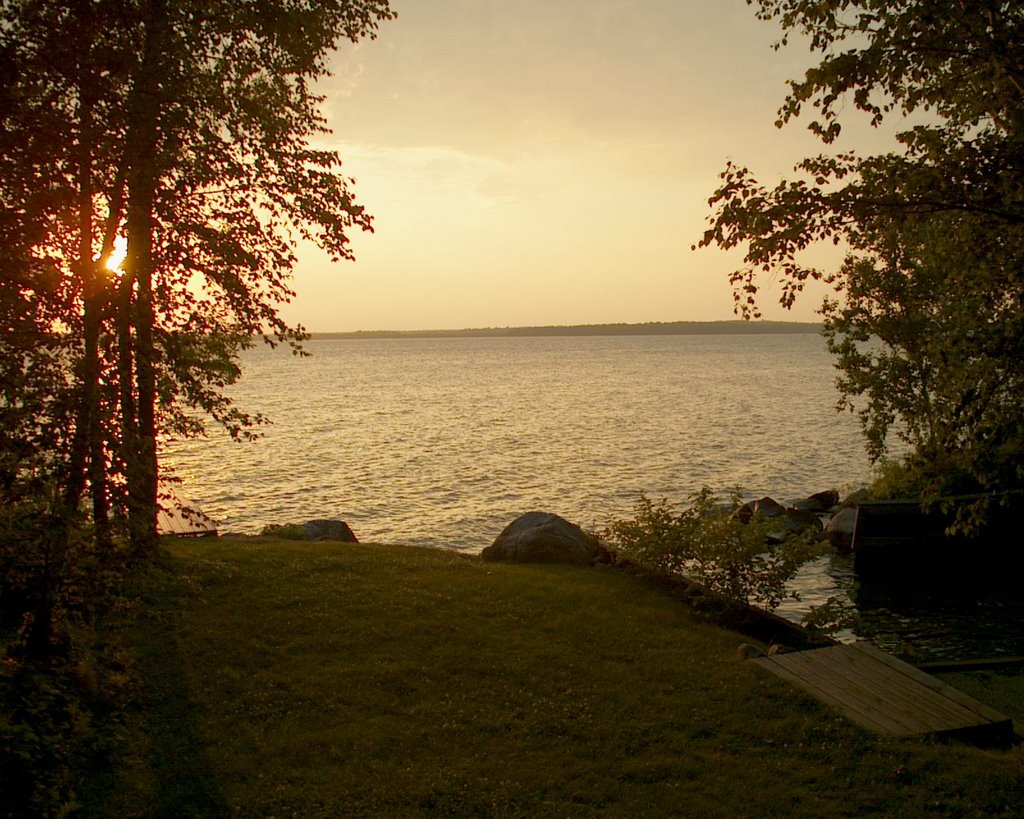
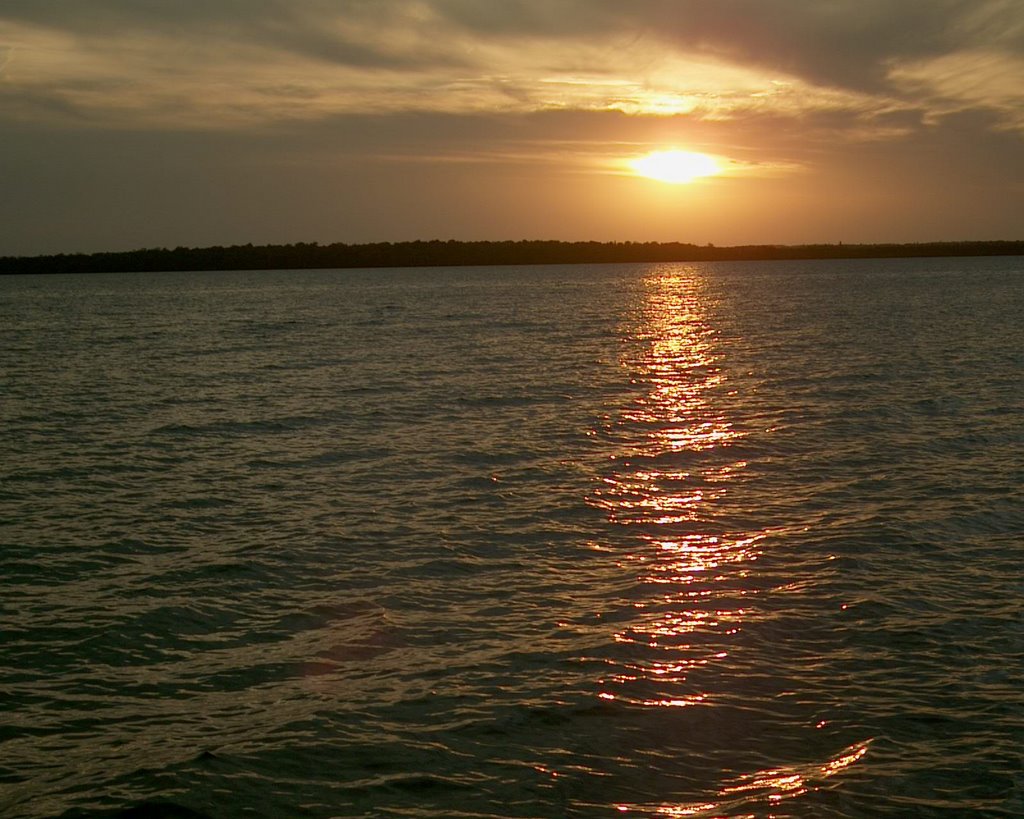
Three Recent Leech Lake Sunset Photos


Monday, July 31, 2006

Leech Lake Update 7/31/2006

FROM:
Walker Area Fisheries Office
07316 State Hwy. 371 NW
Walker, MN 56484
218-547-1683


Greetings!

This is the first periodic update we are sending to Leech Lake area resorts, businesses, and others interested in DNR activities on Leech Lake. The goal of these messages is to keep you up to date with our findings and our current activities on the lake. It has been a busy year to this point, and our annual sampling is just getting started. Below is a summary of the major points of interest.

Double-crested cormorants
To date, nearly 3,000 cormorants have been culled on Leech Lake. Major control efforts are over for the year, however, 20 additional birds will be taken per week for the cormorant diet study. The U.S. Fish and Wildlife Service approved the taking of 7,400 cormorants for the state of Minnesota. Up to 4,000 cormorants from Leech Lake may be taken. Currently, there are approximately 1,900 cormorants on Leech Lake. Two graduate students continue their work on 1) quantifying what cormorants eat on Leech Lake and 2) relating the diet work back to the fishery (what does it mean for Leech Lake fish populations).

Stocking
Earlier this year, volunteers helped DNR staff stock more than 22 million walleye fry. At the time, these fish were the size of mosquito larvae. Now, eleven weeks later, stocked and wild walleye are approaching five inches in length. In addition to walleye fry, the Leech Lake Division of Resource management raised 206,000 walleye frylings. With help from the Walker Office, these fish were stocked the last week of June. Walleye frylings are larger than fry and smaller than fingerlings. All stocked walleye were marked with a chemical (called oxytetracycline) that identifies them as either fry-stocked or fryling-stocked. By marking these fish, we can estimate the hatch of wild fry and determine the stocking contribution to the 2006 walleye year class.


Shoreline Seining
On July 10, we started sampling for young-of-the-year walleye and yellow perch using a long net called a shoreline seine. This standard assessment work gives us our first look at the new year class and so far, what we are seeing is encouraging. We sample at five stations around the lake and all have young walleye present. Their abundance and average size are good signs for a strong year class. Trawling (a purse-like net pulled behind a boat) in mid-August will provide more information. Some trawling two weeks ago for a walleye diet study found a number of walleye from the 2005-year class already 10 inches in length. With two more months to grow this year, anglers can expect the 2005-year class to reach "keeper" sizes sometime next summer.

Rusty Crayfish
Rusty crayfish are an invasive exotic species to Minnesota and Leech Lake. Native to the Ohio and Tennessee River valleys, they were likely brought to this area by anglers for use as bait. There is concern that rusty crayfish are eating walleye eggs in large enough numbers to reduce the number of hatching walleye. Late this winter, the MN DNR and Bemidji State University started research to address what impacts rusty crayfish may have on Leech Lake walleye. Laboratory work found rusty crayfish are active at water temperatures that walleye spawn in and also revealed most activity occurred at night. Divers from the MN DNR and Cass County Dive Team counted crayfish along likely walleye spawning shoals to estimate their density. Later this summer, a graduate student will further this research at Bemidji State University.
Rusty crayfish are known to impact fish populations, especially bass and panfish. Here are three Minnesota lakes that have high densities of rusty crayfish. It appears the bass/panfish populations in these lakes are decreasing, yet, the walleye are numerous.

1. Eagle's Nest #3

2. Newfound Lake

3. Sucker Lake


Of Interest
While seining near Five Mile Point, we caught a larger than normal fish. A muskellunge feeding in the shallow waters found its way into our net. This is the third time I have sampled muskie in a seine. The fish was photographed and released to continue feeding in the warm, shallow water. It’s possible this fish hatched on the nearby spawning habitat that was protected by the land purchase and creation of Five Mile Point Aquatic Management Area (AMA). Conservation efforts such as this certainly go a long way to protecting Leech Lake fish populations, habitat and water quality.


If you have questions or comments, please contact:
Pat Rivers (pat.rivers@dnr.state.mn.us) 218-547-1683
or
Harlan Fierstine (harlan.fierstine@dnr.state.mn.us) 218-547-1683

Saturday, July 29, 2006

Strong "year class" for Leech Lake Walleye

Good news. Early indicators point to a very successful young-of-the-year walleye population in Leech Lake as the Walker Fisheries conducts shoreline seine sampling. Click here for the full story.

Wednesday, July 26, 2006

Lake Level Low

According to the Army Corps of Engineers "Leech Lake Dam and Reservoir" web site, the lake water level is currently at 1294.11 feet, which is roughly where the water level was in April.

For you history buffs, here's some statistics from Jan. 1, 1965 through May 13, 2004:

* Highest Recorded: 1296.09 ft., June 16, 2001
* Lowest Recorded: 1292.69 ft., Nov. 25, 1976
* Recorded Range: 3.4 ft.
* Average Water Level: 1294.33 ft.
* Ordinary High Water Level Elevation: 1294.90 ft.

This means we're about 0.2 ft. below average and 0.8 ft. below the ordinary high water level. You don't need to tell that to my neighbor John Newman. He knows there's a problem because he couldn't get his boat out of the boatlift because the water level was so low.

And there doesn't seem to be much rain in the forecast for the Leech Lake area to help the situation. Between today and early August, there is only a slight chance of some isolated thunderstorm activity. Not nearly enough to fill our beautiful lake.

Thursday, July 13, 2006

July 4th Fishing Report


A lot to report from my recent visit to Leech Lake's Sucker Bay.

While my Memorial Day week visit to the lake was mostly a bass and walleye affair, my July 4th week visit was almost exclusively a perch-focused event. And quite successful.

I want to thank my neighbor and fishing buddy John Newman, and his family of fishing fanatics, for finding 'the birches,' a veritable hot-bed of jumbo perch activity.

For days the wind was blowing out of the West pushing baitfish and other aquatic edibles into the weeds in 8-10 feet of water in front of 'the birches.' The preferred method for fishing the jumbos was seining Leech Lake minnows (mostly emerald shiners) and using them to bait slip-bobber rigs, Northland Gum-Ball jig heads, Northland Mimic Minnow Spins, and Johnson Beetle Spins. The results were nothing short of incredible! Dozens of jumbo perch were caught during a 3-4 day period, culminating in a wonderful Shore Lunch fish fry for dinner on July 4th. What a fantastic way to celebrate America's 230th birthday.

Unfortunately, the wind shifted just after July 4th and the perch fishing slowed considerably. I also experienced a meltdown of various marine equipment. First, both my aft and fore livewells stopped working, and then my MinnKota PowerDrive trolling motor died. Both malfunctions will be dealt with during the winter.

On our final day at the lake for this visit, my beautiful wife Kathleen (with whom I just celebrated 25 years of marriage) caught a very nice jumbo perch while we were casually drifting in the boat while watching another gorgeous Leech Lake sunset.

All in all, a great visit to Leech Lake.